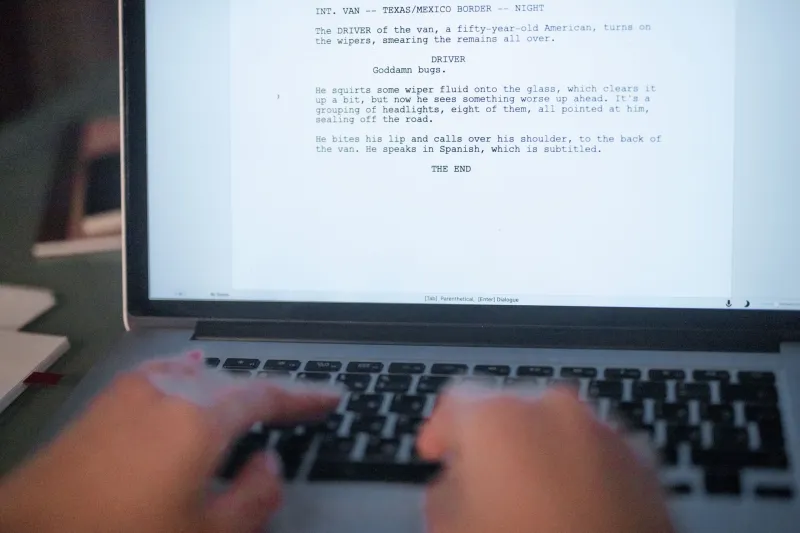
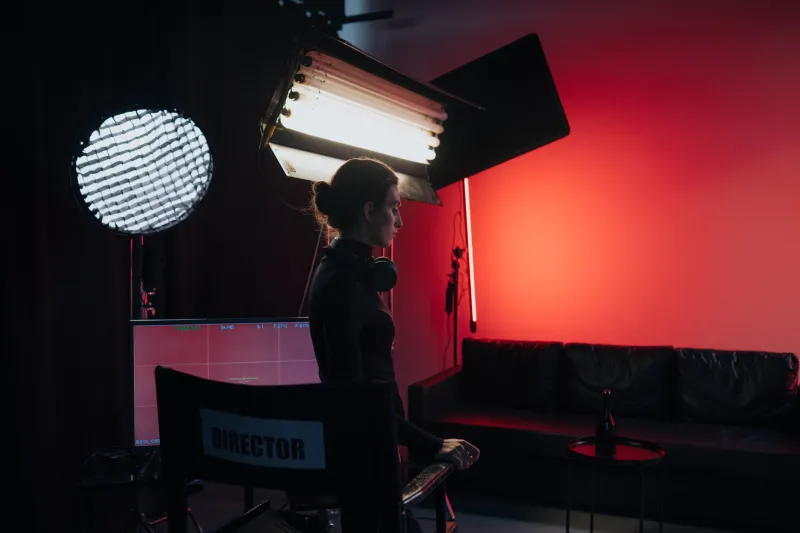
The Room Where Stories Are Made: How Women Television Writers Are Shaping the Soul of American Culture
There is a persistent mythology in American cultural criticism that places the cinema screen at the apex of storytelling prestige. Film festivals, awards ceremonies, and academic syllabi have long consecrated the feature film as the primary site of artistic ambition. Yet, by nearly every measurable standard—viewership, cultural conversation, the sheer volume of hours audiences invest—television has become the medium through which America most intimately narrates itself. And within that medium, it is increasingly women who are doing the most urgent, resonant, and structurally sophisticated work.
The irony is that those women remain almost invisible to the critical apparatus that claims to celebrate storytelling craft.
The Scale of the Oversight
Consider what the television writers' room actually produces. A single season of a prestige drama may encompass ten to thirteen hours of narrative—the equivalent of five or six feature films, sustained across a continuous arc of character development, thematic escalation, and structural complexity that no two-hour film can replicate. When Shonda Rhimes built the interlocking universe of Grey's Anatomy, Scandal, and How to Get Away with Murder, she was not simply writing television. She was constructing a sustained cultural infrastructure that reshaped how millions of Americans understood ambition, race, gender, and institutional power.
Yet Rhimes's achievement, and those of her contemporaries, is rarely discussed with the same critical vocabulary reserved for celebrated male filmmakers. The medium is still too often treated as the lesser sibling of cinema—despite the fact that, for most Americans, it is the primary space in which they encounter stories about people who look and feel like them.
According to research from the Writers Guild of America, women represent fewer than 40 percent of television writers overall, and that figure drops sharply when examining showrunner positions—the executive creative role that most closely parallels a film director's authority over a project. The structural barriers are real, documented, and persistent.
The Architecture of Serialized Storytelling
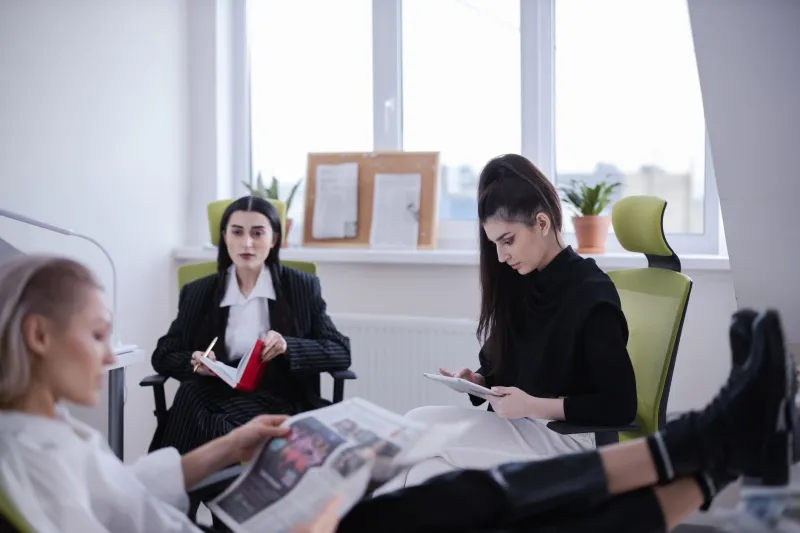
What makes the television writers' room a uniquely demanding creative environment—and a uniquely powerful one—is its collaborative, long-form nature. Unlike screenwriting for film, which typically involves a single writer or small team working toward a fixed endpoint, television writing is iterative, cumulative, and relational. Characters must sustain psychological coherence across years. Thematic threads must be planted in early episodes and harvested seasons later. The emotional contract between story and audience is renegotiated every week.
Women writers have demonstrated a particular aptitude for exactly this kind of structural depth. Lena Waithe's work on Master of None and her creation of The Chi illustrates how serialized form can hold the full complexity of Black American life in ways that a single feature film rarely can. The episodic structure allows for the kind of patient, accumulative character building that transforms a neighborhood into a world.
Similarly, Michaela Coel's I May Destroy You—co-produced with the BBC but broadcast extensively in the United States and deeply embedded in American cultural conversation—demonstrated that television could approach trauma, consent, and recovery with a formal sophistication that left most theatrical releases looking comparatively blunt. The series did not resolve its central wound in a single cathartic scene. It sat with ambiguity, returned to it, complicated it, and ultimately arrived at something far more honest than resolution.
The Specific Texture of Exclusion
The barriers women face in television writing rooms are, in some respects, distinct from those in film. The writers' room is a collective environment governed by informal hierarchies, and research has consistently shown that women's pitches are more frequently interrupted, credited to others, or simply ignored in group settings. Junior female writers in particular report being expected to perform administrative labor—note-taking, scheduling, emotional mediation—that their male counterparts are not.
The ascent to showrunner is further complicated by the industry's reliance on mentorship pipelines. Showrunners tend to hire writers who have worked in rooms they previously occupied, creating a self-replicating system that has historically favored men. Breaking that cycle requires not merely individual talent but deliberate institutional intervention—something that has begun to happen, unevenly, in the wake of the #MeToo movement's exposure of how comprehensively power had been abused in creative spaces.
The formation of initiatives such as the Television Academy's Diversity Programs and the WGA's own equity efforts have created some new entry points. But entry is not the same as authority, and authority is not the same as creative freedom.
Voices That Are Changing the Calculus
Among the women currently reshaping American television from within, several deserve sustained critical attention. Issa Rae, whose Insecure used the deceptively modest form of a half-hour comedy to excavate the interior lives of Black women navigating professional ambition and romantic uncertainty in Los Angeles, built something that felt genuinely new. The show's tonal precision—its refusal to sentimentalize or pathologize its protagonist—was the direct product of Rae's creative authority over every dimension of the project.
Jenny Lumet, whose screenplay for Rachel Getting Married received significant critical recognition in film circles, has done some of her most formally ambitious work in television, where the longer form accommodates the kind of moral complexity she has always sought. The movement of writers like Lumet between film and television further destabilizes the artificial hierarchy between the two mediums.
Meredith Averill's stewardship of Locke & Key and her earlier work on The Haunting of Hill House alongside Mike Flanagan illustrate how women writers in genre television are not simply adapting existing material but fundamentally reconceiving it—centering emotional interiority and relational consequence in spaces that have historically prioritized spectacle.
Why Film Criticism Must Expand Its Frame
For a site dedicated to American cinema through a feminist lens, the question of television is not a distraction from our central concern—it is an extension of it. The stories that shape how Americans understand womanhood, power, desire, and justice are no longer told exclusively, or even primarily, in theaters. They unspool across streaming platforms, network schedules, and cable channels, in formats that demand a different kind of critical engagement but no less rigorous a one.
Celebrating women's contributions to American storytelling requires following those contributions wherever they lead. And increasingly, they lead to the writers' room—a space that is unglamorous, collaborative, and structurally undervalued, and that is, for precisely those reasons, where some of the most consequential feminist creative work in America is currently being done.
The invisible architects of our cultural imagination deserve to be seen. That is, after all, what criticism is for.