Speaking for Themselves: How Women Screenwriters Are Finally Writing Female Desire Into the American Script
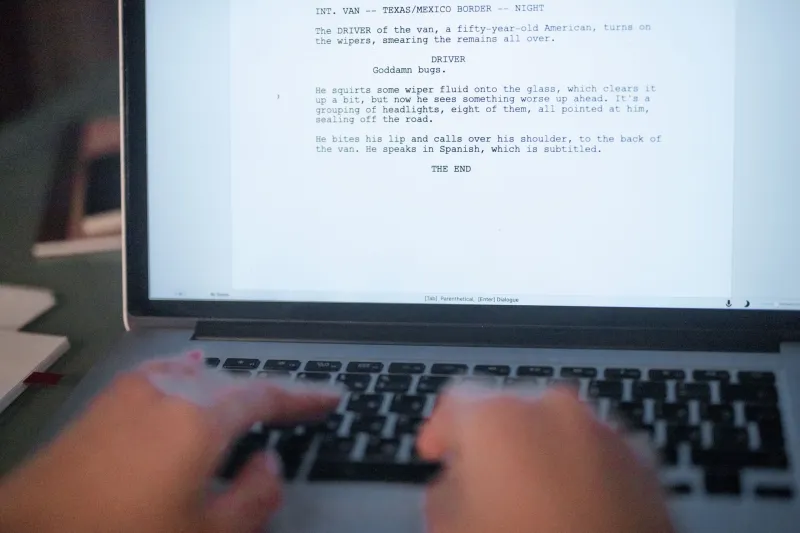
There is a particular kind of silence that runs through decades of American cinema — not the silence of empty rooms or unscored sequences, but the silence of women who were never given the right words. They were handed lines that explained their feelings to men, justified their choices to audiences, or performed desire as spectacle rather than expressing it as experience. The screenwriter behind those lines was, more often than not, a man imagining what a woman might say. That imagination, however well-intentioned, carried its limits with it onto the page.
What is happening now, in the hands of a rising cohort of female screenwriters, is something closer to a linguistic correction. These writers are not simply inserting stronger women into familiar frameworks. They are rebuilding the very grammar of how women speak on screen — about what they want, who they are, and what they refuse to pretend otherwise.
The Problem with Lines Written from the Outside
To understand why this shift matters, it helps to sit with what came before. The history of Hollywood screenwriting is, in large measure, a history of women filtered through male perception. Female desire in particular was routinely translated into something legible to a presumed male viewer: softened, deflected, or repackaged as romantic longing rather than acknowledged as appetite in its own right.
Consider how frequently, across decades of American film, a woman's wanting was communicated not through what she said but through how she looked at someone else. The camera did the speaking. Her gaze became the dialogue. When women were given actual words to express longing or ambition, those words were often organized around how they affected the men nearby — how her desire complicated his journey, threatened his stability, or ultimately resolved into his satisfaction.
Female screenwriters working today have named this pattern and are actively writing against it. The shift is not merely ideological; it is technical. It lives in scene construction, in the rhythm of exchanges, in which character holds the question and which one is made to answer.
Desire as Subject, Not Subtext
One of the most consequential changes in contemporary scripts by women is the willingness to let female characters articulate desire directly, without apology or narrative punishment. In films written by women over the past decade, audiences have encountered women who state what they want in the first act and are not required to suffer for it by the third. That structural permission — desire without mandatory consequence — represents a significant departure from the classical Hollywood template.
Scripts emerging from writers such as Céline Song, Cord Jefferson, and Emerald Fennell demonstrate how dialogue can carry the full weight of female interiority without reducing it to confession or crisis. In Past Lives, Song constructs conversations between her characters that hold longing and pragmatism simultaneously — a woman who is allowed to want two things at once without the script forcing her to choose in ways that diminish her. The dialogue does not explain her desire to the audience. It simply exists, as desires do, complex and unresolved.
Fennell's Promising Young Woman operates differently but with equal precision. The film's protagonist speaks in registers that shift deliberately — charming, then surgical, then devastatingly honest. The screenplay trusts the audience to follow those shifts without a male character translating them. The woman is not performing for the room; she is executing a vision the script grants her full ownership of.
What Authentic Conversation Actually Sounds Like
Beyond individual desire, women screenwriters are transforming how female characters speak to one another. The Bechdel Test, however blunt an instrument, pointed toward a structural absence: women in American films rarely talked about anything except men. Contemporary female-written scripts are filling that absence not simply by giving women other topics, but by giving them the kind of conversations that reflect the actual texture of women's interior lives.
This means dialogue that moves laterally — that circles, contradicts, and returns. It means scenes where ambition is discussed without irony, where female friendship contains friction that is not resolved by a betrayal plot, where sexuality is spoken about with the same ease that male characters have always enjoyed on screen. It means, in short, conversations that do not feel like exhibits.
Greta Gerwig's screenplay for Barbie, co-written with Noah Baumbach, generated significant cultural attention for a specific monologue — America Ferrera's character articulating the impossible contradictions placed on women. What made that sequence land was not its sentiments, which were familiar to most women in the audience, but the decision to let a woman say them plainly, at length, without irony undercutting the weight. The screenplay made space for the speech. That space is a craft decision, and it reflects a screenwriter's understanding that female experience, spoken aloud, is sufficient dramatic material without further ornamentation.
The Texture of Ambition
Female ambition has historically been one of the most distorted subjects in American screenwriting. When women in films wanted power, success, or professional recognition, the screenplay frequently framed those desires as warnings — ambition as the thing that cost a woman her relationships, her femininity, or her moral standing. The driven woman was a cautionary figure, and the dialogue written for her often telegraphed that cautionary purpose.
Contemporary female screenwriters are refusing that framing. They are writing ambition as a legitimate organizing principle for a female character's life, not as a flaw that the narrative will eventually correct. Conversations about career, creative work, and professional identity appear in these scripts without the surrounding architecture of punishment. Women discuss what they are building without the screenplay hinting at what they will lose for building it.
This is not naïveté about the real costs women pay for ambition in American life. Rather, it is a refusal to have the screenplay itself become another site of that cost — another space where a woman's wanting is treated as inherently dangerous.
Why It Changes Everything
Film dialogue shapes cultural imagination. The lines women are given on screen influence, in diffuse but real ways, what women feel permitted to say off it — what registers as expressible, what feels too much, what language seems available for their own experiences. When American cinema spent decades giving women lines that softened, deflected, or performed desire for an external audience, it was not merely reflecting culture. It was participating in the construction of a particular kind of silence.
The women screenwriters working now are not simply writing better lines. They are expanding what American cinema understands itself capable of hearing. They are demonstrating, scene by scene and exchange by exchange, that women's inner lives are not subtext to be decoded but subject matter to be engaged — directly, seriously, and without apology.
The conversations American cinema has been missing were never impossible to write. They were simply, for a very long time, not being written by the people who knew how to have them.