The Architects of What Gets Made: How Women Producers Are Redesigning Hollywood's Greenlight Culture
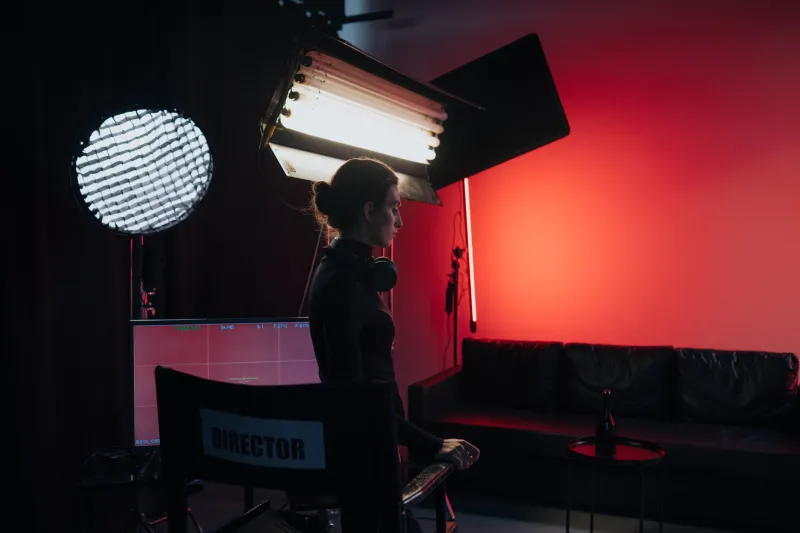
Long before a camera rolls, before a script is finalized, before a director is attached or a cast assembled, there is a producer. She is the one who read the manuscript at midnight and knew it was something. She is the one who spent three years keeping a project alive through development hell, who structured the financing, who negotiated the creative compromises that preserved the story's integrity while making it possible to make. She is, in the most fundamental sense, the reason the film exists at all.
For most of Hollywood's history, that role has been occupied predominantly by men. The consequences of that imbalance are not abstract. They are visible in the stories American cinema has told, the perspectives it has centered, the narratives it has treated as universal versus niche, and the filmmakers it has deemed bankable versus risky. When the people who decide what gets made do not include women in any significant proportion, the films that get made reflect that absence.
The landscape is changing. Slowly, unevenly, and against considerable institutional resistance—but changing nonetheless. A generation of women producers has accumulated the credits, the relationships, and the leverage to reshape Hollywood's greenlight culture from within. Understanding how they are doing it, and what they are building, is essential to understanding where American cinema is headed.
The Greenlight and the Gatekeeping
To appreciate the significance of women's growing power in producing, it is necessary to understand how the greenlight process actually functions. A greenlight—the formal decision by a studio or financier to move a project into production—is not a single moment. It is the culmination of an extended process of development, packaging, and advocacy in which the producer is the central figure.
Producers bring projects to studios. They attach talent. They commission scripts, give notes, and shape the creative direction of a film long before anyone else is involved. They also absorb the risk of development: financing early-stage work out of their own deals, spending years on projects that may never be made. The greenlight is, in a real sense, a vote of confidence in the producer as much as in the project itself.
Historically, that confidence has been extended along lines of familiarity and social proximity. Studio executives greenlit projects from producers they knew, trusted, and had worked with before—which, in an industry where power had long been concentrated among men, meant that the pipeline of greenlit projects was shaped by the preferences and blind spots of a relatively homogenous group of decision-makers. Female-driven narratives were routinely characterized as having limited commercial appeal. Women filmmakers were deemed unproven. The logic was circular, self-confirming, and extraordinarily durable.
Building the Alternative Infrastructure
The most consequential response to that gatekeeping has not been to petition the existing infrastructure for inclusion—though advocacy has its place—but to build alternative structures capable of getting films made outside or alongside the traditional studio system.
Women producers have been instrumental in developing the financing models, distribution partnerships, and production companies that have made this possible. The rise of streaming platforms as serious buyers of prestige content created an opening that women producers moved into deliberately and strategically. Platforms hungry for content and theoretically less beholden to the conventional wisdom about what audiences wanted proved, in some cases, more receptive to female-driven projects than the traditional studio apparatus.
Beyond streaming, women producers have been central to the growth of independent financing structures—co-productions, international pre-sales, equity financing from non-traditional sources—that allow projects to be capitalized without requiring a major studio's blessing at the outset. This is not a workaround. It is a fundamental restructuring of how American films get financed, and it has expanded the range of stories that can be told at a meaningful scale.
What Women Producers Are Choosing to Make
The question of what women producers are greenlighting is inseparable from the question of what they have been denied the opportunity to greenlight until recently. The stories that have historically been underfunded and undervalued—stories about women's interior lives, about female friendship and ambition and desire, about the experiences of women of color and LGBTQ+ women and working-class women—are not incidental to what women producers are choosing to champion. They are the point.
This is not a claim that women producers exclusively make films about women, or that their choices are reducible to identity politics. The range of projects that women producers have shepherded into existence is genuinely broad. But there is a consistent pattern of investment in narratives that the industry's traditional gatekeepers treated as too narrow, too niche, or too unfamiliar to be commercially viable—and a consistent pattern of those narratives finding substantial audiences once they are actually made.
The commercial case for female-driven content has been made repeatedly and continues to be ignored repeatedly, which suggests that the resistance is not primarily economic. It is cultural. It is about whose stories the industry has internalized as default, as universal, as worth the risk. Women producers are not simply making different films. They are challenging the assumption that certain stories require justification at all.
The Question of Credit and Visibility
One of the persistent structural inequities in producing is the invisibility of the role itself. Audiences rarely know who produced a film. Awards attention for producers is limited and often overshadowed by director and acting categories. This invisibility has particular consequences for women, whose contributions to the development and financing of major projects are routinely minimized or attributed to male collaborators in the cultural narrative around a film's creation.
The work of making women producers visible—through critical coverage, awards recognition, and industry reporting that names them and describes their contributions accurately—is not merely a matter of fairness. It is a practical prerequisite for the next generation of women entering the industry to understand what a career in producing can look like and who has built the path they might follow.
The Shape of What Is Coming
The women who are producing American cinema today are not working in isolation. They are building companies, mentoring emerging producers, advocating for equitable deal structures, and creating the conditions under which the next cohort of women filmmakers will be able to work. The infrastructure they are building is, in the most literal sense, the infrastructure of what American cinema will be.
What that cinema looks like—whose stories it tells, whose perspectives it centers, whose voices it amplifies—will be determined in significant part by the choices being made right now in development meetings and financing conversations and greenlight decisions where women are, for the first time in Hollywood's history, sitting at the table in meaningful numbers. The architecture of American film is being redesigned. The blueprints belong to them.