Every Voice Matters: How Women Dialogue Editors Are Preserving the Authentic Sound of American Speech
There is a moment in almost every film where a character speaks and something rings false. The words may be correct. The performance may be strong. But the voice — the texture of it, the rhythm, the particular music of a specific person from a specific place — has been smoothed away. What remains is comprehensible, clean, and somehow hollow.
This is not an accident. It is the result of a set of professional choices made deep in post-production, in a discipline so technical and so removed from the glamour of filmmaking that most audiences have never heard of it. Dialogue editing — the work of assembling, cleaning, and refining the spoken word in a finished film — has historically prioritized intelligibility above all else. The result has been a systematic flattening of vocal identity, one that has fallen hardest on characters whose voices diverge from a narrow standard of American speech.
Women working in dialogue editing are changing this calculus. Their approach to the craft treats the voice not merely as a carrier of information but as a form of characterization — one that carries class, geography, ethnicity, and emotional history in ways that no amount of performance coaching or visual storytelling can fully replicate.
The Technical Foundation of a Political Choice
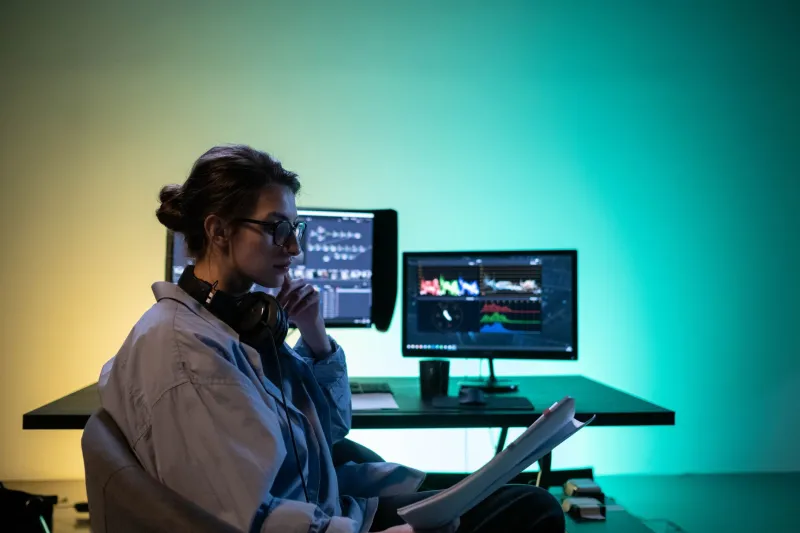
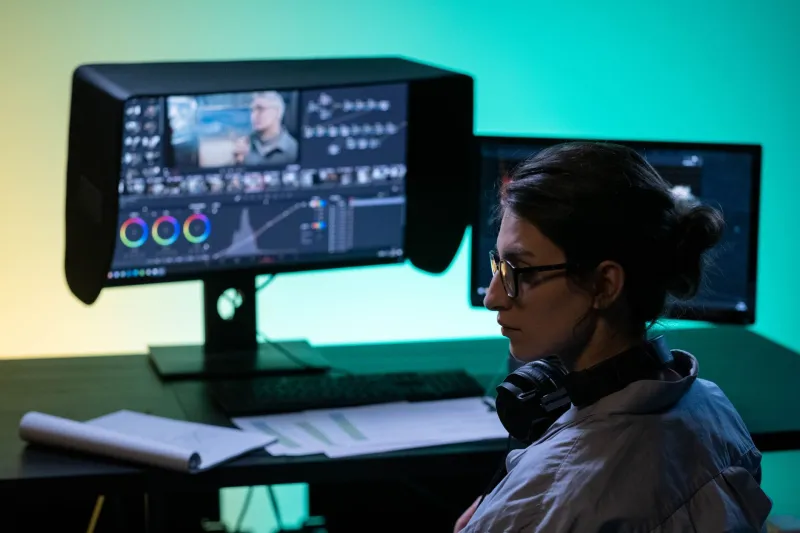
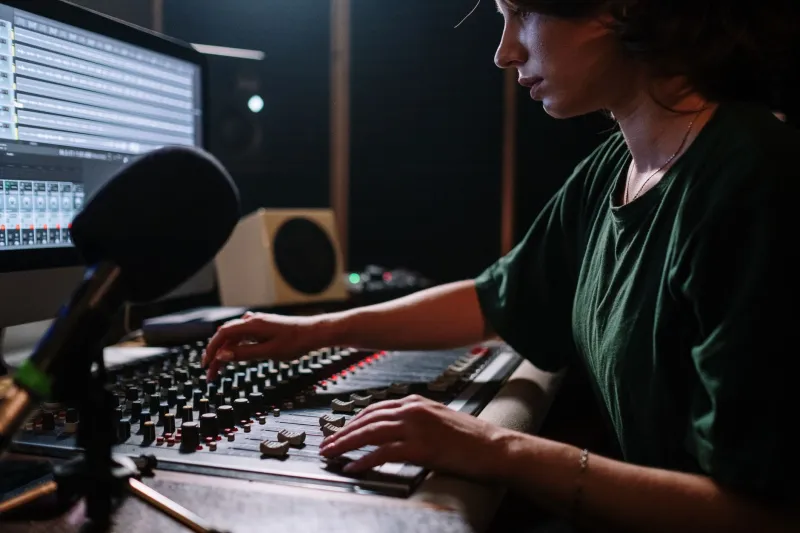
To understand what dialogue editors do, it helps to understand what they are working with. On any given production, the audio captured on set is imperfect: ambient noise bleeds into takes, microphones pick up the rustle of clothing, lines are delivered with varying levels of energy across multiple setups. The dialogue editor's task is to construct a coherent, clean track from this raw material — selecting the best takes, matching room tone, and ensuring that the spoken word lands with clarity and intention.
Within these technical parameters, however, there is significant interpretive latitude. Which take of a line gets used? When a performance is inconsistent across setups, which version of the character's voice becomes the definitive one? When automated dialogue replacement (ADR) is required — when an actor re-records lines in a studio rather than using the original production audio — how closely does the replacement track need to match the original? These decisions, made one at a time over hundreds of hours of editing, accumulate into something that shapes how a character is experienced.
For characters whose voices carry markers of regional American identity — a Creole cadence from Louisiana, the particular vowel shifts of Appalachian speech, the rhythms of African American Vernacular English — these decisions are especially consequential. A dialogue editor who prioritizes a narrow standard of broadcast-neutral American English will, in the course of making apparently technical choices, strip a character of vocal specificity that may be central to who they are.
What Gets Lost in the Cleaning
The history of Hollywood sound is, among other things, a history of standardization. The technical demands of early recording equipment encouraged a preference for clear, unaccented, mid-Atlantic speech. This preference calcified into an aesthetic norm that persisted long after the technical constraints that produced it had been resolved. Characters with regional or ethnic vocal identities were either recast, coached out of their natural speech patterns, or subjected to post-production processes that smoothed away what made them sound like themselves.
The gendered dimension of this history is significant. Female characters, in particular, have been subject to a form of vocal policing that mirrors the broader cultural pressure on women to modulate their self-expression. Voices deemed too loud, too regional, too marked by class or ethnicity were treated as problems to be solved rather than qualities to be honored. The dialogue editing suite became, in this context, a site where the cultural anxieties of the industry were quietly enacted.
Women dialogue editors who are conscious of this history approach their work differently. They ask different questions of the material: What does this character's voice tell us about where she comes from? What is lost if we replace this production take — with its ambient texture and spontaneous breath — with a studio-recorded ADR line? When a regional accent is present in a performance, is our instinct to clean it a technical judgment or a cultural one?
Specificity as Storytelling
The argument that women dialogue editors are making — through their work, if not always through public statements — is that vocal specificity is not a problem to be managed but a resource to be honored. A character who sounds like she is from a particular place, a particular community, a particular moment in American life is a richer character for it. The texture of her voice is part of her interiority.
This principle has concrete implications for female representation on screen. When women characters are given voices that reflect the full range of American speech — when a working-class woman from rural Georgia sounds like herself, when a first-generation Latina character's bilingual rhythms are preserved rather than ironed out, when an older Black woman's cadences are treated as music rather than noise — the effect on audience identification is significant. Viewers who have never heard their own speech patterns reflected on screen experience something they may not be able to name but can certainly feel: the recognition that their voices, too, belong to the story.
The Invisible Architecture of Performance
Dialogue editors occupy an unusual position in the filmmaking hierarchy. They work in close collaboration with sound supervisors and re-recording mixers, and their contributions are often absorbed into the broader category of "sound" in the credits — if they are credited prominently at all. The Academy of Motion Picture Arts and Sciences does not offer a dedicated Oscar category for dialogue editing, which means that the craft receives no equivalent of the visibility that cinematography, editing, or production design enjoy during awards season.
This invisibility has consequences. It makes it harder for women in the field to build public profiles that would allow them to advocate for their approach to the work. It makes it harder for the industry to recognize when dialogue editing choices have been central to a film's success. And it makes it easier to continue treating the discipline as a technical service function rather than a creative one — a framing that, not coincidentally, tends to devalue work performed by women.
Toward a New Standard
The women reshaping dialogue editing are not working in opposition to the craft's technical demands. They are expanding what the craft is understood to be capable of. Intelligibility and authenticity are not mutually exclusive goals. A voice can be clean and present and still sound like it belongs to a specific human being from a specific American life.
What they are insisting on, in the quiet and unglamorous space of the editing suite, is that the standard against which American voices are measured needs to be wider. That the range of ways Americans speak is not a set of deviations from a norm but the norm itself — plural, varied, and irreducibly alive. And that the choice to preserve that aliveness, take by take and line by line, is one of the most consequential acts of storytelling available to the people who make American films.