Behind the Spectacle: Women VFX Supervisors and the Fight to Own What They Build
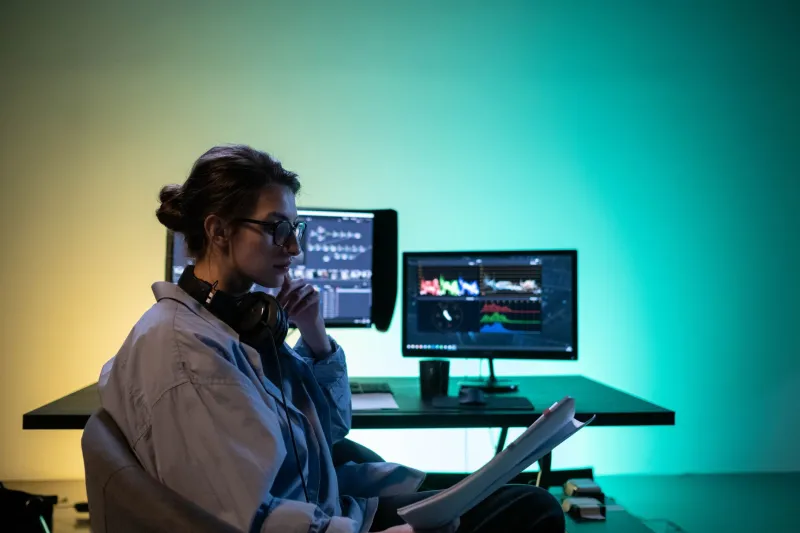
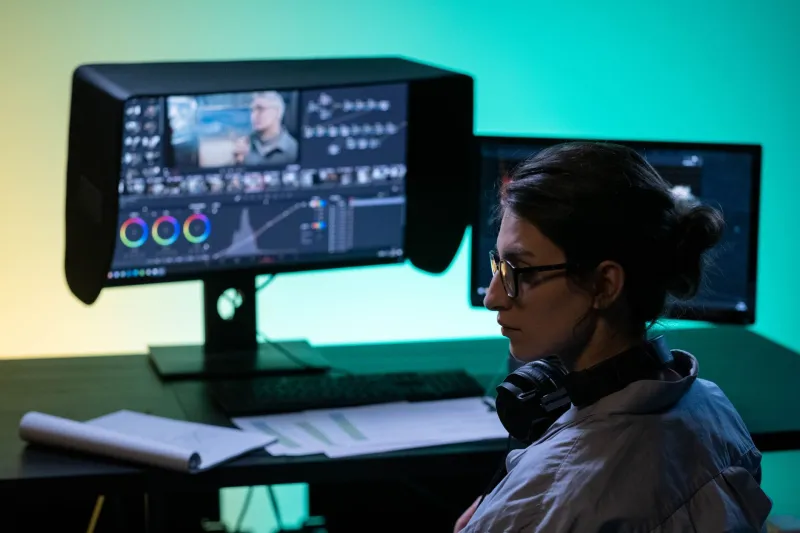
There is a particular kind of erasure that occurs in plain sight. When a superhero ascends through a collapsing skyline, when an alien ocean stretches to a horizon that no camera could ever reach, when fire consumes a city block frame by meticulous frame—audiences see the director's name attached to the vision. What they do not see is the woman who spent three years building that world from code, light, and an almost unreasonable command of physics.
Women visual effects supervisors occupy one of the most technically demanding and creatively consequential roles in contemporary American filmmaking. They are the architects of the impossible. And yet, in an industry that has always struggled to credit women for the work they demonstrably perform, VFX remains among the most acutely invisible disciplines—precisely because the best effects work is designed to disappear.
The Problem with Seamlessness
Visual effects supervision is, by professional design, an art of concealment. The goal is not to announce itself but to convince. When an effect is executed with sufficient mastery, a viewer does not think about the labor behind it—they simply believe what they are seeing. This standard of invisibility, which is the highest possible measure of craft, also creates the conditions for institutional erasure.
Directors speak to press. Directors accept awards. Directors are the narrative through which Hollywood explains itself to the public. The VFX supervisor, by contrast, operates in a technical stratum that most entertainment journalism does not know how to translate for general audiences. When that supervisor is a woman working within a field where women comprise a fraction of senior leadership, the erasure compounds.
According to data gathered by the Visual Effects Society, women remain significantly underrepresented at the supervisory level across major studios and production houses. The disparity is not a reflection of talent or pipeline—women have been working in visual effects since the discipline's earliest days in American cinema. It is a reflection of who gets promoted, who gets credited in marketing materials, and whose name appears in the trade coverage that shapes industry reputation.
Credit as Currency
In Hollywood, credit is not merely symbolic. It is the mechanism by which careers are built, deals are structured, and legacies are established. A VFX supervisor whose name appears prominently in a film's awards campaign becomes hirable at a higher rate and a higher fee. A supervisor whose contributions are folded into a director's creative biography—or attributed collectively to a team in ways that obscure individual achievement—does not accumulate the same professional capital, regardless of the quality of her work.
This dynamic is particularly acute in the awards ecosystem. The Academy Award for Best Visual Effects is presented to a maximum of three individuals, a limitation that frequently benefits those who occupy the most visible positions within a production hierarchy. Women who have served as co-supervisors or as leads on specific sequences—contributions that may represent thousands of hours of work and dozens of creative decisions—can find themselves outside the nominated tier entirely, their names lost in the scroll of end credits that most audiences never read.
The women who have broken through this structure have often done so through a combination of exceptional skill and strategic self-advocacy that their male counterparts are rarely required to perform with equal intensity. They have learned to document their contributions with precision, to speak articulately about their work in the language of both art and technology, and to build alliances with directors, producers, and fellow crew members who understand that crediting a VFX supervisor accurately does not diminish anyone else's achievement.
Building the Next Generation
Among the most consequential work being done by senior women in visual effects is the deliberate cultivation of those who come after them. Mentorship in a discipline as technically specialized as VFX is not merely inspirational—it is practical. The knowledge required to supervise a major effects sequence involves years of accumulated expertise in software, rendering, compositing, and on-set collaboration that cannot be acquired through formal education alone. It is transmitted through proximity to experienced practitioners.
When women occupy supervisory roles, they create proximity for other women. They hire differently. They advocate within their organizations for the promotion of talented women who might otherwise be passed over in favor of less qualified men with better institutional visibility. They speak at universities and industry events with a specificity about the realities of the field that generic diversity initiatives rarely achieve.
This pipeline work is unglamorous and largely uncelebrated, but its effects are measurable. Studios that have made genuine commitments to retaining senior women in VFX have seen corresponding increases in the representation of women at junior and mid-level positions. The correlation is not accidental. Representation at the top changes the culture of a department in ways that recruitment efforts at the entry level, operating within an unchanged environment, simply cannot.
Art and Technology Are Not Opposites
One of the more persistent misconceptions that has shaped the undervaluation of women in visual effects is the assumption that the discipline is primarily technical—and that technical work is somehow less creative, less authored, less worthy of the kind of recognition we extend to directors or cinematographers. This framing is both factually incorrect and structurally convenient for those who benefit from keeping VFX supervisors in a subordinate professional category.
The decisions a VFX supervisor makes are irreducibly artistic. She determines how light behaves in a world that does not exist. She decides the texture of a creature's skin, the weight of a collapsing structure, the emotional register of a digital environment designed to support a narrative moment. These are not technical parameters to be optimized—they are interpretive choices that shape the meaning of what an audience experiences. To separate them from the category of creative authorship is to misunderstand what the work actually is.
Women VFX supervisors have been making this argument for years, and the industry is slowly beginning to hear it. The conversation has accelerated in part because the scale of visual effects work in contemporary American cinema has made it increasingly difficult to sustain the fiction that a director alone is responsible for what appears on screen. When a film's budget allocates more resources to visual effects than to any other single line item, the question of who is making the creative decisions within that domain becomes harder to deflect.
The Work Speaks, If We Learn to Listen
There is a version of this story that ends with a simple demand: give women the credit they are owed. That demand is legitimate and overdue. But the deeper project is more expansive than attribution. It requires the industry to reckon with how it defines authorship, how it structures recognition, and who it has historically decided is worth seeing.
The worlds that women VFX supervisors build are among the most visited imaginative spaces in American culture. Millions of people inhabit them for hours at a time, feeling genuine emotion in response to environments that exist only because a woman—and often a team of women—willed them into being with technical rigor and artistic precision. That labor deserves more than a line in a credit scroll. It deserves the same sustained critical attention we extend to every other dimension of the filmmaking craft.
American cinema's most spectacular achievements are collaborative. It is time the industry told that story honestly.