What the Studio Left on the Floor: Executive Interference and the Erasure of Women Directors' Creative Vision
The film you see in the theater is the result of a negotiation. That negotiation involves the director's vision, the studio's commercial calculus, test screening data, marketing considerations, and the accumulated opinions of executives who may or may not have a coherent aesthetic framework. For most directors, navigating this process requires compromise. For women directors, evidence suggests, the compromises demanded are more frequent, more significant, and more likely to fundamentally alter the film's meaning.
The gap between a woman director's cut and the version a studio releases theatrically is not always visible to audiences. What is lost — the scenes removed, the tonal shifts imposed, the character arcs truncated — is precisely what cannot be measured by those who never had access to it. But the pattern, documented across decades of industry history and increasingly discussed by women filmmakers themselves, is clear enough to demand serious examination.
The Mechanics of Creative Removal
Understanding how studio interference operates requires understanding the structure of creative authority in Hollywood production. Directors without final cut — the contractual right to determine the version of the film released to the public — are legally subject to studio override. Final cut is a privilege extended almost exclusively to a small group of established, predominantly male directors. The vast majority of filmmakers, including most women directing studio features, work without it.
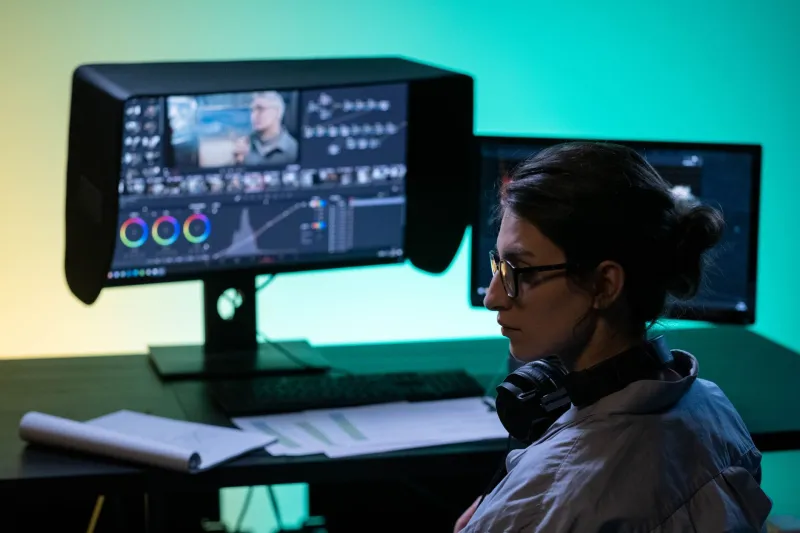
This means that after principal photography concludes, the director's relationship to her own film becomes conditional. She may be invited to participate in the editing process, her input valued to varying degrees depending on the studio, the project, and the personalities involved. But she cannot prevent the studio from making changes she opposes. The film she spent years developing, writing, and shooting can be restructured, shortened, or tonally reoriented without her consent.
The specific forms this interference takes are varied. Scenes that establish female characters' interiority — their ambitions, their sexuality, their anger — are frequently identified by test screening audiences as "slow" or "off-putting" and become early candidates for removal. Endings that resist conventional resolution are softened. Subplots involving women's relationships with one another, often among the most thematically significant material in films by women directors, are condensed or eliminated when studios determine that the runtime needs trimming.
The Disproportionate Burden
The question of whether this interference falls more heavily on women directors than on their male counterparts is difficult to answer with clean statistical precision, partly because the industry's internal deliberations are rarely made public and partly because women direct a smaller proportion of studio features, making direct comparison complex. What is available is a substantial body of testimony from women filmmakers, a pattern of case studies, and the structural logic of an industry in which women's creative authority has historically been treated as provisional.
When a male director of established reputation clashes with a studio over creative control, the conflict is frequently framed — in trade coverage, in industry conversation — as a battle between artistic vision and commercial necessity. The director's perspective is taken seriously as a creative position, even when the studio ultimately prevails. When women directors report similar conflicts, the framing shifts. Their resistance to studio notes is more likely to be characterized as difficult behavior, their insistence on their own vision more likely to be read as inflexibility rather than integrity.
This framing matters because it affects what happens next. A male director who fights for his cut and loses retains the industry credibility that allows him to fight again on the next project. A woman director who is perceived as difficult may find that the next project is harder to secure — that her professional reputation has absorbed a cost her male peers did not have to pay for the same behavior.
Case Studies in Contested Vision
The history of American cinema contains numerous instances in which women directors' original cuts were substantially altered before release, with consequences for the film's critical reception and cultural impact. Some of these cases have entered public discourse because the directors themselves chose to speak about them — often years after the fact, once the professional risk of candor had diminished.
The consistent thread across these accounts is not that the studio changes were always commercially motivated in a straightforward sense. Sometimes the interference reflected genuine aesthetic disagreement. Sometimes it reflected discomfort with the film's subject matter — its frankness about female experience, its refusal to center male perspectives, its willingness to let female characters occupy morally ambiguous space. In these cases, the editorial intervention was not simply a business decision. It was a cultural one, shaped by assumptions about what audiences would accept from a story told through a woman's lens.
The material that ends up on the cutting room floor — or, increasingly, in digital storage — represents a significant body of work that American cinema audiences have never had the opportunity to evaluate. The loss is not only to the individual directors whose vision was compromised. It is to the broader cultural record of what women filmmakers were making, and what the industry chose not to show.
The Contractual Protections Women Directors Need
The most direct remedy for studio interference is final cut — but expanding access to final cut contractually is a slow process that requires individual directors to negotiate from positions of leverage they may not yet possess. Alongside this longer-term goal, there are more immediately achievable protections worth pursuing.
Directors' guilds, and specifically the Directors Guild of America, have an existing framework of creative rights protections that could be strengthened. The DGA's basic agreement includes provisions for directors' cuts — the right to produce and present a director's version of the film before the studio exercises its own editorial authority. Strengthening this provision to require studios to document and justify departures from the director's cut would create at least a formal record of the gap between original vision and final release.
Beyond contractual mechanisms, studios that are genuinely committed to the creative authority of women directors need to establish internal practices that reflect that commitment. This means including women directors in post-production decisions at every stage, not merely as consultants but as decision-makers. It means creating formal channels through which directors can escalate disputes without career penalty. And it means reconsidering the test screening process — a mechanism that, in its current form, systematically disadvantages films that challenge audience expectations, which is to say films that do what the best art does.
The films women directors make are already shaped by the conditions of the industry they work within. The additional shaping that occurs in post-production, without their consent and often against their explicit judgment, represents a loss that is both personal and collective. American cinema is not only losing the films these women intended to make. It is losing the audience's opportunity to decide for themselves what those films were worth.