Voices in the Dark: How Women Boom Operators and Dialogue Editors Are Shaping the Sound of Female Truth
There is a moment in nearly every great American film when a character says something that stops the audience cold — a confession, a confrontation, a whisper that carries the weight of the entire story. That moment does not happen by accident. It is built, layer by careful layer, by professionals who never appear on screen and whose names scroll past in a blur at the end of the picture. Among the most essential of those professionals are boom operators and dialogue editors, and among the most overlooked within those ranks are the women who have spent decades perfecting this craft in near-total anonymity.
Sound, as any serious student of cinema will tell you, accounts for roughly half of the audience's emotional experience. Yet the labor of capturing and shaping that sound remains one of the least discussed dimensions of filmmaking in mainstream critical discourse. When women are doing that labor — operating the boom pole on a cold exterior location at five in the morning, or spending sixty-hour weeks in a post-production suite painstakingly cleaning and assembling a dialogue track — their contributions become doubly invisible.
The Physical and Intellectual Demands of the Boom
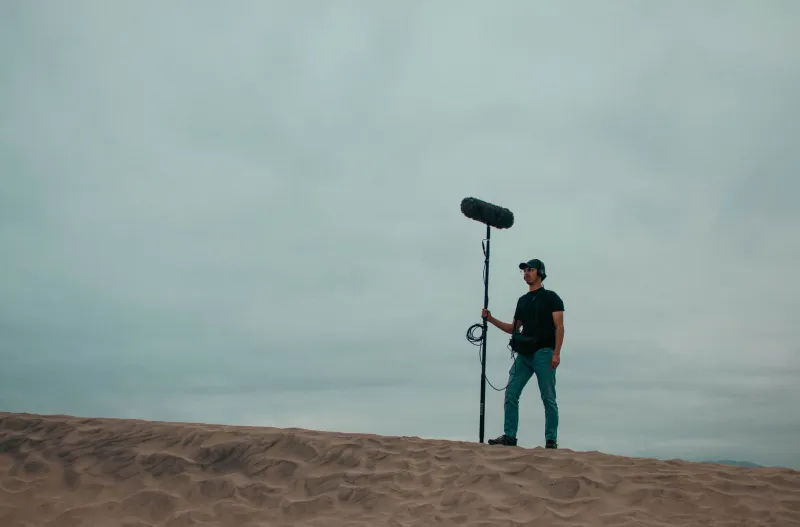
Boom operating is, first and foremost, a physical discipline. The operator must hold a microphone at the precise edge of the frame for hours at a time, anticipating an actor's movement before it happens, compensating for wind, ambient noise, and the unpredictable rhythms of live performance. It requires upper-body endurance, spatial intelligence, and an almost musical sensitivity to the cadence of human speech.
Women who pursue this path frequently describe entering a department that has historically treated their presence as an anomaly. Sound crews on major studio productions have been among the most gender-homogeneous in the industry, a reality that the Annenberg Inclusion Initiative has documented in its annual reports on below-the-line representation. The barriers are not merely cultural; they are structural. Union pathways into sound departments often depend on mentorship networks that women have been systematically excluded from, making entry disproportionately difficult.
And yet women are entering, and they are excelling. Professionals working across independent and studio productions alike describe developing their own mentorship pipelines, often through organizations such as the Cinema Audio Society's outreach programs and informal networks built through film school communities. The work of establishing those pathways is itself a form of labor — unpaid, unrecognized, and absolutely necessary.
What the Dialogue Editor Actually Does
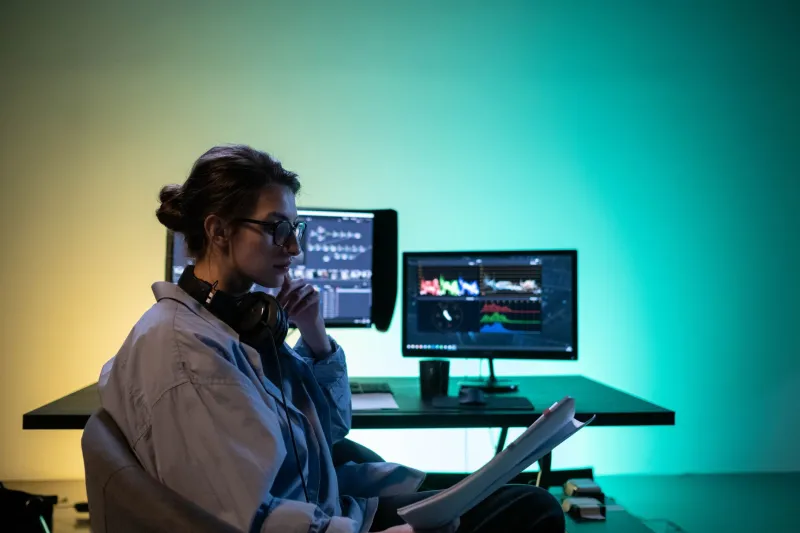
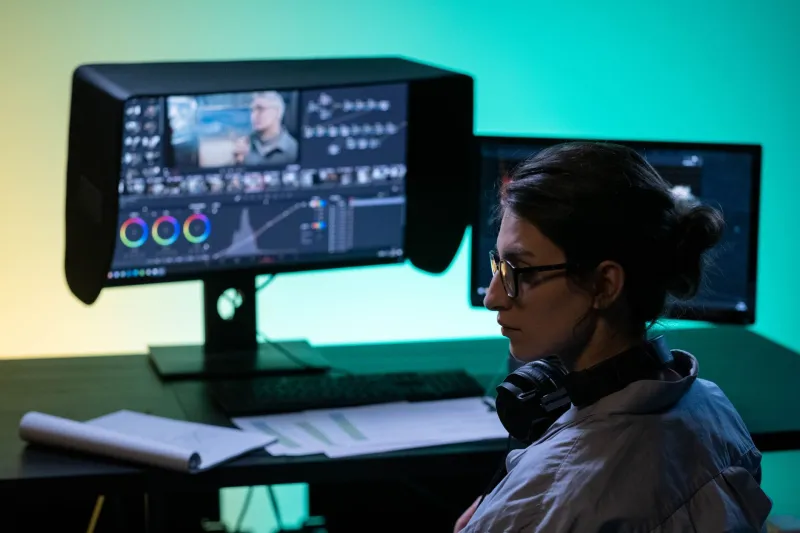
If boom operating is the act of capturing the human voice in its raw state, dialogue editing is the art of transforming that raw material into something that serves the story. A dialogue editor assembles all recorded speech across a film's runtime, selecting the best takes, smoothing transitions between cuts, replacing lines damaged by noise, and ensuring that the emotional register of every spoken word aligns with the director's vision.
This is painstaking, intellectually demanding work that sits at the intersection of technical expertise and dramatic interpretation. The dialogue editor must understand not only acoustics and software but character — must grasp why a particular reading of a line serves a scene better than another, why a breath in the wrong place can undercut a performance, why silence is sometimes the most powerful dialogue of all.
For women working in this role, the stakes of that interpretive responsibility become particularly significant when the characters speaking are women. How a female character's voice is treated in post-production — whether her speech is cleaned to a pristine neutrality or allowed to retain its roughness and grain — communicates something to the audience about her humanity. Women dialogue editors frequently speak about making deliberate choices to preserve the imperfections in a female performance, to resist the industry instinct toward a kind of sonic idealization that flattens rather than deepens characterization.
The Credit Question
Industry credit structures in sound have long been a source of frustration for below-the-line workers at every level, but women in boom and dialogue roles describe a compounding dynamic in which their specific contributions are absorbed into departmental credits that obscure individual achievement. On many productions, boom operators receive no on-screen credit whatsoever, their work subsumed under the production sound mixer's title. Dialogue editors fare somewhat better in post-production credits, but their role remains poorly understood by the press and awards bodies alike.
The Academy of Motion Picture Arts and Sciences does not offer a dedicated award for dialogue editing, a decision that effectively renders the discipline invisible within the industry's most prominent recognition framework. The Motion Picture Sound Editors' Golden Reel Awards do include dialogue categories, and women who have been recognized there describe the honor as meaningful precisely because it comes from peers who understand the work. But peer recognition, however significant, does not translate into the broader cultural acknowledgment that drives hiring, rates, and career longevity.
Advocates within the sound community have begun pushing for more granular credit standards, arguing that the current system fails to accurately represent who does what on a given film. This is not merely a matter of professional pride. Credits are the currency of the industry — they determine who gets the next call, who gets considered for the next step up, who gets to build a career rather than simply survive one job at a time.
Hearing Women Differently
There is a deeper argument to be made here, one that connects the professional circumstances of women in sound to the broader feminist project of American cinema. How female characters sound — the quality, texture, and treatment of their voices — shapes how audiences receive them. A female character whose dialogue has been handled with care, whose silences have been respected, whose vocal imperfections have been preserved rather than erased, arrives on screen with a fullness that a sonically idealized character cannot match.
Women boom operators and dialogue editors are, in many cases, making choices that protect the integrity of female performance in ways that their male counterparts may not be trained to prioritize. They are listening differently because they have lived differently, and that difference has aesthetic consequences that the industry has not yet fully reckoned with.
The conversation about representation in American cinema has made genuine progress in recent years, but it has concentrated overwhelmingly on what audiences can see. It is time to extend that conversation to what they hear — and to the women whose hands, ears, and judgment make that hearing possible.