Consent as Craft: How Female Intimacy Coordinators Are Transforming the Language of Vulnerable Filmmaking
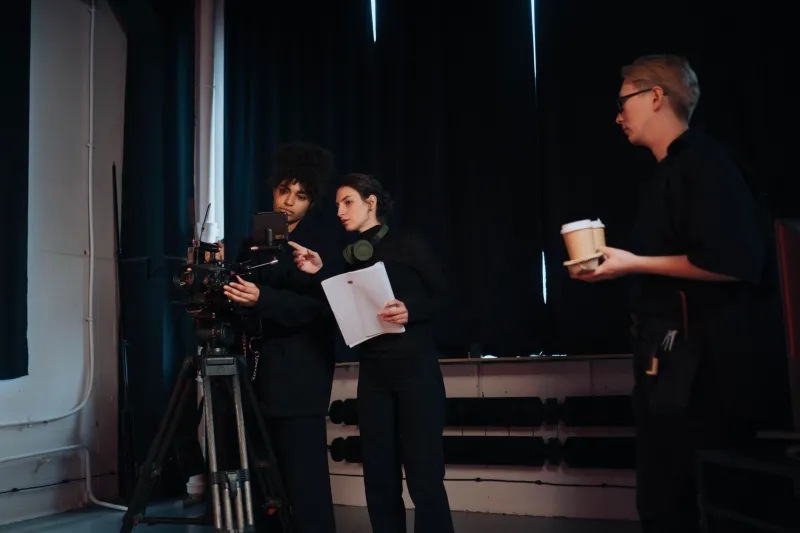
There is a particular kind of courage required to be the person in a room who insists that everyone slow down. On a film set — an environment historically calibrated toward speed, efficiency, and the authority of the director — the intimacy coordinator occupies a role that demands precisely that: deliberation, precision, and an unwavering commitment to the well-being of those in front of the camera. That this profession has been built largely by women is not incidental. It is, in many respects, the point.
Since intimacy coordination began gaining formal recognition in the United States following the seismic cultural reckoning of the #MeToo movement, the role has evolved from a cautious industry experiment into an essential component of professional production. Organizations such as Intimacy Directors International and the Intimacy Professionals Association — both founded and largely staffed by women — have established training frameworks, ethical codes, and advocacy structures that have begun to reshape how American cinema approaches the most physically and emotionally exposed moments in storytelling.
From the Margins to the Center of Production
For most of Hollywood's history, intimate scenes were directed with the same improvisational authority applied to any other shot. Actors were expected to accommodate whatever the director envisioned, often with minimal prior discussion and even less contractual protection. The results were frequently harmful — documented in memoir after memoir, deposition after deposition — and the culture of silence surrounding those harms was enforced by the same hierarchies that produced them.
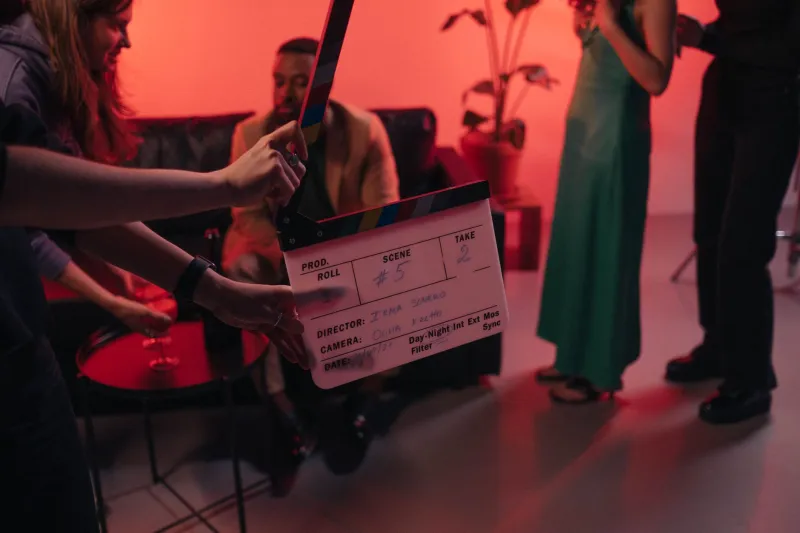
The intimacy coordinator intervenes at every stage of that process. Before a single camera rolls, she is in conversation with the director and screenwriter, examining what a scene genuinely requires narratively and what can be achieved without unnecessary exposure or physical contact. She communicates with actors privately, establishing what each individual is and is not comfortable performing. She negotiates the specific choreography of a scene with the same rigor a stunt coordinator applies to an action sequence — because, as practitioners in this field consistently argue, the two disciplines share far more in common than the industry once acknowledged.
This pre-production work is where much of the most consequential transformation occurs. When an intimacy coordinator is embedded early in the development process, the conversation about a vulnerable scene shifts from "how do we shoot this" to "why are we shooting this, and what does it ask of the people involved." That reframing, subtle as it may appear on the surface, carries profound implications for the stories American cinema chooses to tell.
The Narrative Argument for Intimacy Coordination
Critics of the profession — and they exist, primarily among directors who perceive coordination as an encroachment on creative authority — sometimes argue that the presence of an intermediary disrupts the spontaneity that makes intimate scenes cinematically alive. This argument collapses under scrutiny, and the work of coordinators themselves offers the most effective rebuttal.
When actors enter a vulnerable scene having negotiated their boundaries in advance, having rehearsed specific movements with a professional who understands both their physical limits and the scene's dramatic purpose, they are not constrained. They are liberated. The psychological safety that intimacy coordination provides creates the conditions for genuine emotional availability — the quality every director claims to want and that coercion has never reliably produced.
Films such as Portrait of a Lady on Fire, while French in origin, have influenced American independent filmmakers in understanding what is possible when intimacy is constructed rather than captured. Domestically, the shift is visible in prestige television and independent features alike, where coordinators' credits are increasingly prominent and their influence on performance quality is becoming a recognized component of critical conversation.
Women's Bodies, Women's Authority
It is impossible to discuss intimacy coordination without acknowledging the gendered landscape it was designed to address. The scenes that coordinators most frequently oversee involve female actors in states of physical vulnerability. The directors whose authority once went unchallenged in those moments were, and remain, disproportionately male. The power asymmetry was not abstract; it was structural, and it produced documented, widespread harm.
That women have built this profession — have defined its ethics, trained its practitioners, and advocated for its adoption across the industry — is an act of structural correction. It is women establishing, within the grammar of filmmaking itself, that female vulnerability is not raw material to be extracted but a performance to be negotiated, protected, and honored.
This is not merely a matter of workplace safety, though it is certainly that. It is also a matter of artistic integrity. When a female actor is empowered to define the terms of her physical performance, the performance that results carries a different quality of truth. The audience may not consciously perceive the difference, but it is there — in the specificity of gesture, in the authenticity of emotional response, in the sense that what is being witnessed has been chosen rather than endured.
Script-Level Influence and the Future of the Discipline
Perhaps the most underreported dimension of intimacy coordination's impact is its reach into the writing process. As studios and streaming platforms increasingly require coordinators on productions that include intimate content, writers are beginning to consult with them during development — before scenes are locked, before casting is finalized, before the machinery of production is fully engaged.
This upstream influence has the potential to change not only how intimate scenes are executed but what kinds of intimate scenes American cinema produces. When consent and bodily autonomy are built into the conceptual architecture of a script, the stories that emerge reflect those values. Female desire becomes a subject of genuine dramatic exploration rather than a vehicle for male fantasy. Vulnerability is treated as complex rather than convenient. The bodies of women onscreen are accorded the same narrative dignity as their interiority.
The coordinators driving this evolution are, in many cases, former actors and directors who understand the creative process from the inside. They are not arriving as external regulators but as collaborators with deep investment in the quality of the work. That distinction matters enormously in a culture that has historically resisted oversight by framing it as opposition to art.
A Quiet Revolution with Lasting Consequences
Revolutions in filmmaking culture rarely announce themselves with the clarity of a manifesto. They accumulate in practice — in the credits that appear where none appeared before, in the conversations that now happen at the start of a production rather than being avoided entirely, in the actors who speak publicly about feeling genuinely protected on set for the first time in their careers.
Intimacy coordination is that kind of revolution. It is being built by women who understand, from professional and often personal experience, what the absence of this infrastructure has cost. And it is producing, film by film, a body of work in which the most exposed moments of human experience are handled with the seriousness they have always deserved.
For American cinema, that shift is not a concession. It is an advancement — in craft, in ethics, and in the fundamental understanding of what it means to ask someone to be vulnerable in front of a camera.